
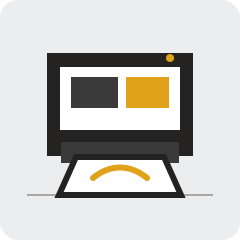
How digital printing works
A digital printer reads the artwork and lays the ink directly onto the item, the way a desktop printer lays it onto paper. There is no screen to burn and no plate to etch, so there is no per-colour setup and no minimum quantity imposed by the setup cost.
That makes it the practical choice for artwork with many colours, gradients or photographic content, and for short runs where making screens would cost more than the job. On dark textiles a white base layer is printed first so the colours above it read true, which is why a dark garment takes longer and costs more to print than a light one.
Other branding methods
Embroidery
Screen printing
Laser engraving
Sublimation
Pad printing
Debossing and foiling
Doming and badges
Vinyl heat transfer
Pen branding




Ask us to price your order
Add the products you want to a quote list, tell us the quantity and how you want them branded, and we come back with pricing. Nothing on this site carries a price because every job is costed on the product, the quantity and the decoration.